
Erosion Control Measures: Their Strengths and Weaknesses
/One important service we offer to clients is erosion and sediment control. Erosion, the process where soil is gradually worn away by water, wind, or gravity, wears away at the foundations of structures and contributes to desertification. It also lowers the quality of water in lakes, rivers, and steams. As erosion damage can be costly and dangerous to humans and the environment, civil-site design often includes providing proper erosion and sediment control measures. Here are three methods that, when effectively used, significantly reduce erosion damage to streams, buildings, and properties.
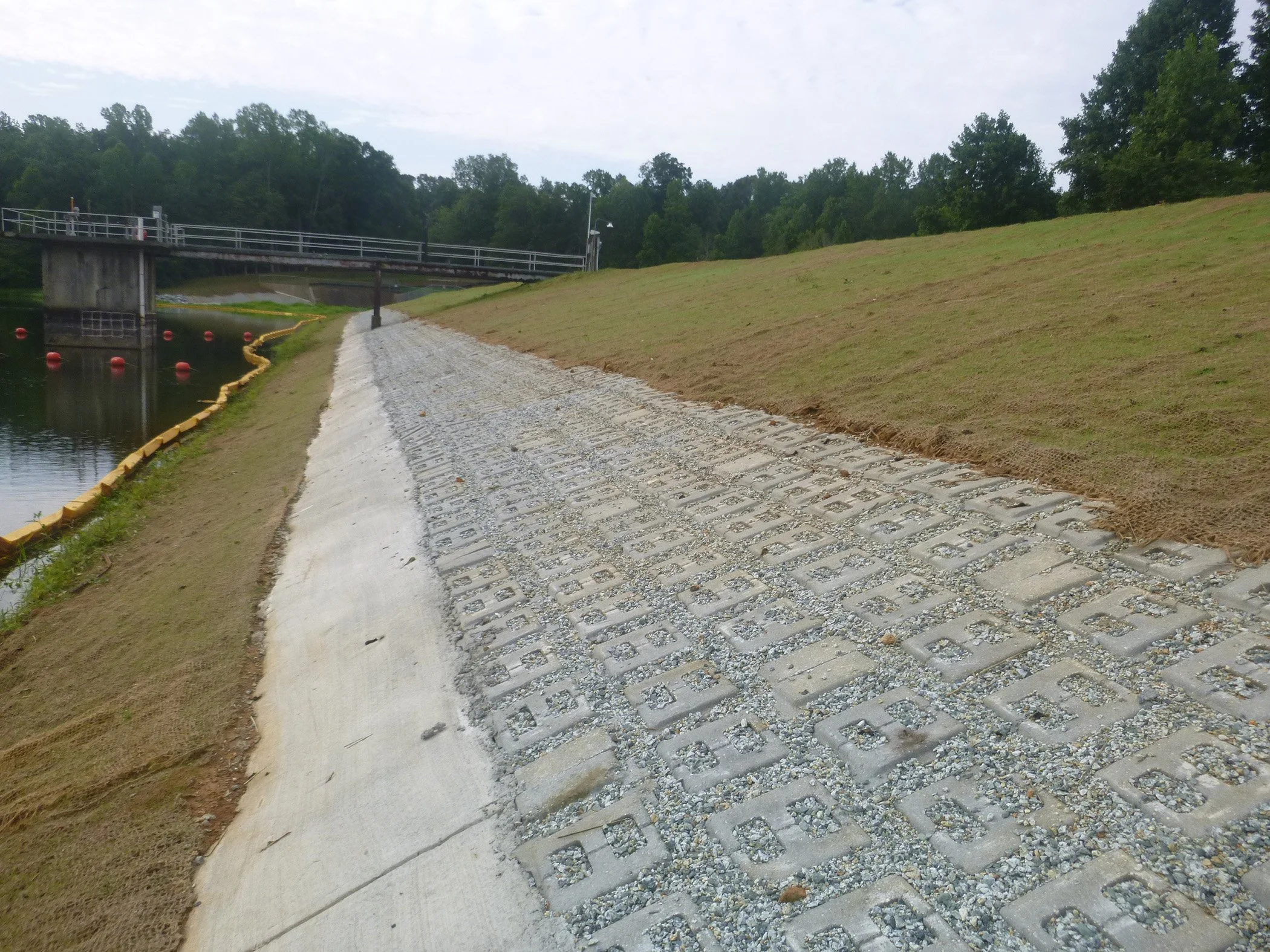
Riprap at Lake Orange
Riprap
Riprap is a layer of different sized stones that reduce erosion on steep surfaces. These disrupt the flow of water that would normally run down a slope which helps to keep the soil in place and protect stream banks, dams, and bridge crossings. Riprap is low maintenance and durable and can be used to protect infrastructure; however, it has environmental drawbacks that cause the NCDEQ to regulate it. Riprap can heat up ponds and streams and the fact that it is made of rock can affect animal habitats. To avoid environmental damage, riprap is best combined with other methods such as vegetation to protect the soil, provide habitats, and maintain water temperature.
Vegetation
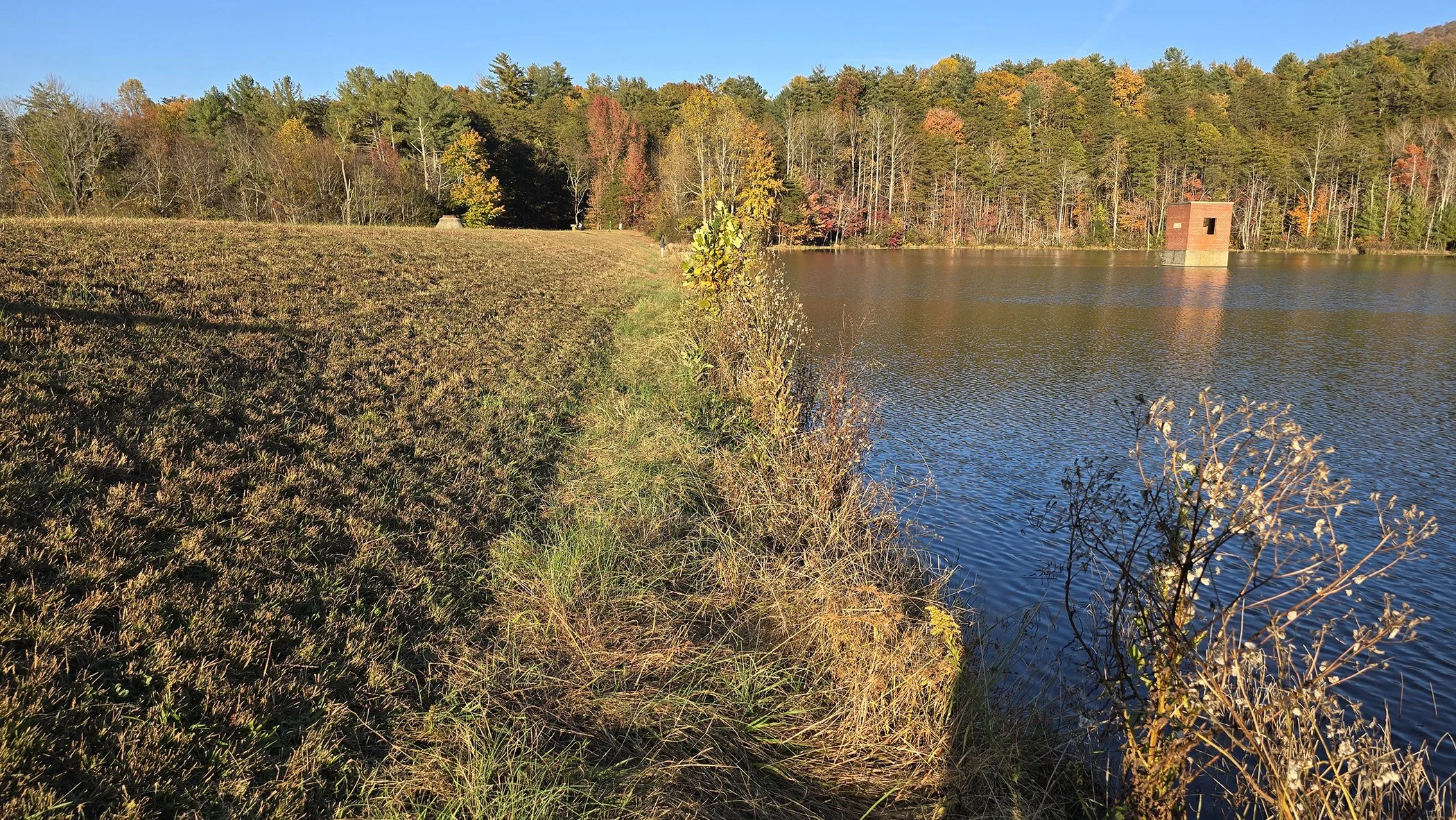
Vegetation at South Mountain Dam
Using native plants to stabilize the soil is both an act of good stewardship as well as being one of the most effective ways of avoiding erosion. Vegetation helps to shield soil from rain and potential scour from overland flow. Plants also naturally remove water from the soil and will spread naturally, thus maintaining and increasing the area being protected. Once established, vegetation is cost-effective and self-sustaining, but that establishment can take time. Vegetation can even be considered high maintenance when native plants are mismanaged, and it cannot grow in steep or naturally rocky areas without support. While vegetation is one of the most effect and sustainable options, it can need to be combined with riprap or retaining walls and requires proper management.
Retaining Walls
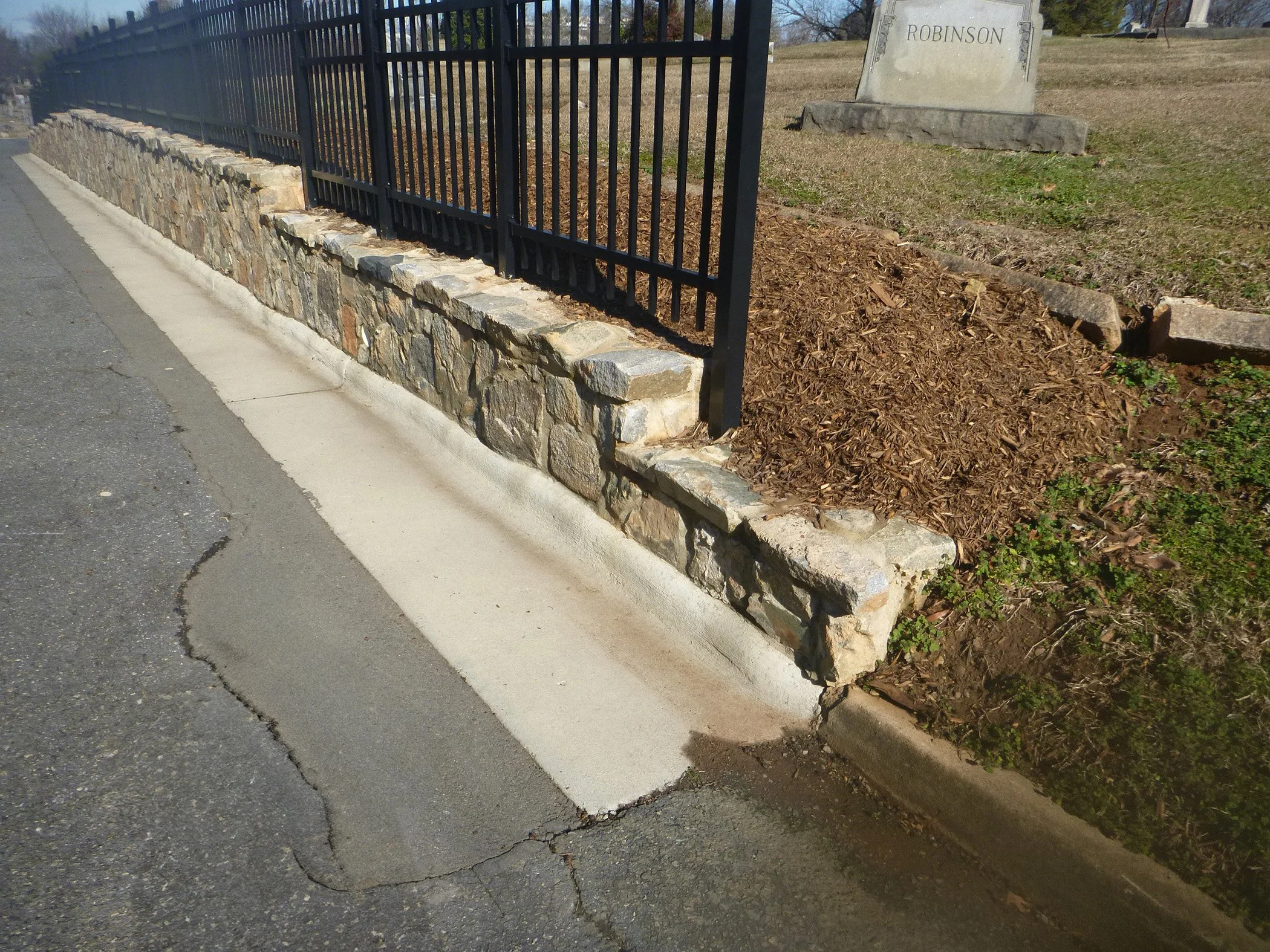
A retaining wall in Charlotte
Retaining walls are generally used in areas with sharp elevation changes. They hold back and stabilize topsoil by stopping the flow of water outright. This halts the process of erosion and allows the water to slowly filter into the ground. Retaining walls are durable and usually require little maintenance once built. However, they are expensive to design and build. Retaining walls can also be environmentally harmful since they’re subject to the erosion they try to prevent and can disrupt the natural environment. Over time, the foundations can become eroded by water filtering down through the soil, causing potential collapses. Sustainable drainage measures are used to reduce this damage, and minimal excavation, with the use of local materials, can help mitigate the environmental harm.
All three methods have their advantages and weaknesses, and through careful planning and sustainable practices, all of them are useful in preventing erosion damage. North Carolina’s risk of erosion, particularly along the coast and even in the triangle area, is quite high, so A&O strives to find the best long-term, low maintenance solutions that allow us to follow the command to be good stewards that we have been given. If you are interested in learning more about Alpha & Omega Group’s work in erosion control, please visit our page for the Nantahala Shooting Ranges.